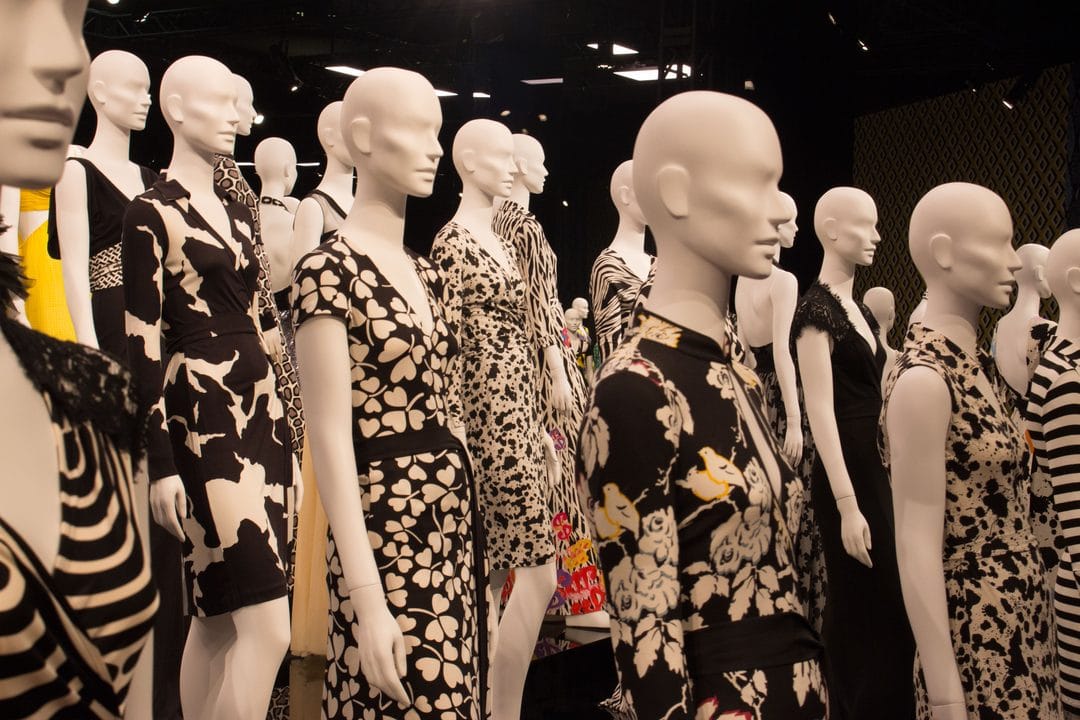
You know the moment. You're three glasses into a wedding reception, someone leans in for a hug, and your hand shoots down to the side of your dress before your brain has even finished the sentence don't let go of the wrap. Every few summers, some corner of the fashion conversation declares the wrap dress "back," as though it ever really left the rail at Diane von Furstenberg. What's actually changed this year is the range on offer — linen-blends, longer midi lengths, sizing that finally goes past a 14 without an asterisk — and that makes it worth asking a more useful question than whether it's trending. Is the one in your basket actually going to stay shut past 11am?
Why the Wrap Dress Keeps Coming Back
Diane von Furstenberg didn't invent the crossover front, but she is the reason it became a wardrobe staple rather than a costume-department idea: her original jersey wrap dress launched in 1974 and sold in the millions within a few years, largely because it solved a problem no other dress shape had — one silhouette that adjusted to fit a changing body without a single alteration. That's still the pitch fifty-odd years later, and it's still true. A wrap dress skims rather than clings, the V-neck elongates without needing a tailor, and because the tie sits wherever you put it, the same dress works whether you're three weeks postpartum or mid-holiday bloat. None of that has gone out of fashion because none of it was ever really fashion-dependent in the first place.
What has shifted is who's making them well. A decade ago your choices were basically DVF at $328 and up, or a flimsy high-street imitation that used a fraction of the fabric and none of the structural thinking. Now Reformation, Banana Republic, and even Marks & Spencer's better ranges are cutting wrap dresses with proper weight and a genuine front overlap, priced anywhere from $70 to $260 depending on fabric. The gap between "cheap-looking" and "expensive-looking" has narrowed. The gap between "stays shut" and "doesn't" hasn't narrowed at all, and that's the part almost nobody tells you before you buy.
The Design Flaw Nobody Mentions When They Recommend One
Most gaping isn't bad luck. It's under-engineering.
A true wrap dress closes with nothing but a tie at the waist and, if you're fortunate, an interior button or snap holding the underlayer in place against your hip. That interior fastening is the entire difference between a dress you can wear to dinner and one you spend the evening holding shut with your left hand. Cheaper versions skip it to save a few cents in production, relying purely on the outer tie — which loosens the moment you sit down, reach overhead, or walk briskly for a bus. If you've ever bought a $45 wrap dress and felt betrayed by it within a week, that missing interior tab is almost certainly why.
True Wrap vs Faux Wrap — The Difference That Actually Matters
There are two entirely different constructions being sold under the same name, and the difference matters more than fabric or print. A true wrap dress has a genuinely open front — you tie it yourself, and the amount of skin it shows depends entirely on how snugly you pull it. A faux wrap, by contrast, is sewn or snapped shut at the point where the fabric crosses, with only a decorative tie or sash layered on top for the look. The faux version is more forgiving for anyone who has ever lost an actual wrap dress to a gust of wind on a train platform, because there's no way for it to come undone in public. The true version, worn correctly, gives a better fit — you can cinch it tighter on a smaller frame or looser after a big lunch, which a faux-wrap's fixed seam simply can't do.
Petite frames tend to get more out of the true wrap than the styling guides suggest, and this is worth saying plainly because most advice pushes petites toward faux-wrap "safety" by default. A true wrap lets you pull the tie in exactly to your natural waist rather than wherever a pattern-maker guessed it should sit, which on a smaller frame is often the difference between a dress that fits and one that's visibly swimming in fabric at the side seam. The trade-off is real — you do have to check the mirror after every trip to the bathroom — but for a petite build specifically, it's frequently the better buy, not the riskier one.
What to Check Before You Buy
Skip the online product photo entirely and go straight to these four things, ideally with the dress actually on your body rather than a hanger:
- The front overlap should cross past your opposite hip bone, not just meet it — hold the tie loosely and see how much fabric is left over.
- Look for an interior snap, button, or fabric loop at the side seam; if there's nothing holding the underlayer down, that's the dress that gapes by the second coffee refill.
- Fabric weight matters more than fibre content on the label. A thin viscose wrap will cling and shift all day, while a mid-weight ponte or a proper jersey holds its shape and drape through a full shift at work.
- Check where the tie sits relative to your actual waist, not the model's — a tie positioned two inches too high reads as maternity-wear on anyone who isn't visibly pregnant, and there is no styling trick that fixes it after the fact.
Reformation's wrap styles are consistently the better buy in the $200–$260 range if the interior snap matters to you, since the brand has kept that detail standard across most of its wrap-front pieces for several seasons running. Banana Republic's are the smarter pick under $150 — heavier ponte, a genuine hip-crossing overlap, and considerably less pilling after repeat washes than the fast-fashion equivalents at a similar price. Skip anything under $60 in a wrap silhouette unless you've physically handled the fabric first; at that price point the interior fastening is almost always the first thing cut.
Styling It Somewhere Other Than the Brunch Table
The wrap dress got typecast as weekend-only wear largely because Instagram decided that's where it lives, which undersells what it can actually do. Add a structured blazer and it moves straight into a client meeting without looking like you tried too hard to dress the occasion up. Swap flat sandals for a low block heel and a stack of thin gold bangles, and the exact same dress that did the school run at 9am can do a dinner reservation at 8pm — no outfit change required, which matters more on a genuinely packed day than most style advice admits. For anyone commuting on a bike or standing on a crowded train platform, though, a mid-thigh wrap length paired with wind is its own small hazard; a midi length solves this without sacrificing the shape, and it's worth the extra few inches of fabric if your day involves any wind at all.
Where the Money Actually Goes
If you're going to spend real money on one wrap dress this year rather than three cheap ones, put it into fabric weight and the interior fastening before you put it into print or colour. A plain navy wrap dress in a heavy ponte will outlast four seasons of trend-driven prints in thin viscose, and it photographs just as well at a wedding as a bold pattern does — arguably better, since it won't fight with the venue's décor in every photo. The dresses that actually earn a permanent spot in rotation are rarely the loudest ones on the rail; they're the ones you stopped thinking about because they simply behave, wash after wash, sit after sit, hug after too-enthusiastic hug at someone else's reception.