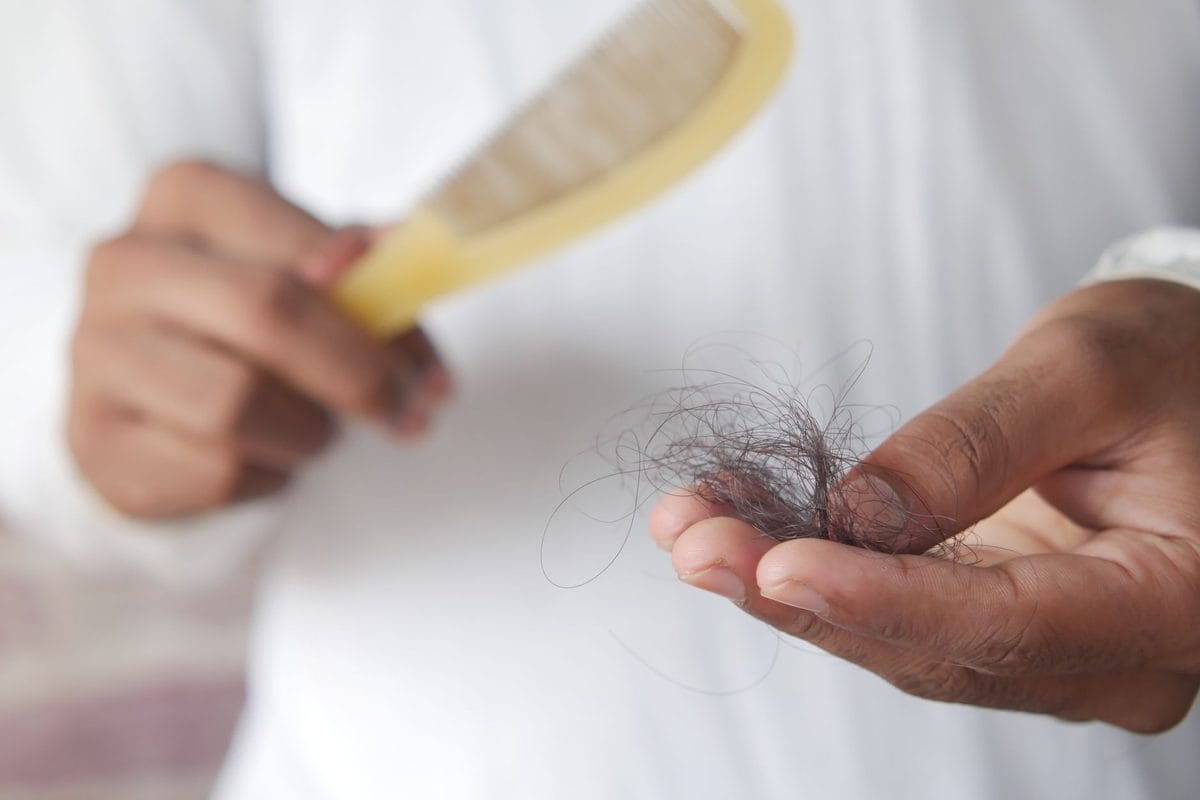
There is a week every fall when the shower drain delivers the news before the weather does. The hairbrush needs emptying twice, loose strands turn up on the shoulders of your good black sweater, and a 7 a.m. search for "why is my hair falling out" offers everything from stress to thyroid disease. Most of the time the explanation is far less dramatic. Scalp hair follows a seasonal rhythm that researchers have been measuring since at least 1991, and for plenty of people the shedding peaks in late summer and early fall. The catch is that the same symptom can also be the first sign of something unrelated to the calendar. It pays to know what the ordinary version looks like before you panic or, worse, order a bottle of hair-growth gummies.
What the research actually shows about fall shedding
The best-known study is also a small one. In 1991, Valerie Randall and F.J.G. Ebling at the University of Sheffield tracked hair growth every 28 days for 18 months in 14 healthy men aged 18 to 39 and published the results in the British Journal of Dermatology. The share of scalp follicles in the growing phase peaked above 90% in March and slid to a low in September. The number of shed hairs peaked around August and September at an average of about 60 a day, more than double the rate of the preceding winter. A 2009 study in the journal Dermatology looked back over six years of records from 823 otherwise healthy women who had come in worried about hair loss. Microscope analysis of their plucked hairs showed the highest proportion of resting hairs in summer, a smaller bump in spring, and the lowest in late winter. A follicle that has stopped growing rests for two to four months before a new hair pushes the old one out, according to the British Association of Dermatologists (BAD). That fits neatly with a summer peak in resting hairs turning into a fall peak in your brush.
Treat all of this as a tendency rather than a timetable. The two studies do not agree to the month, one followed 14 men in a single English city, and the other drew on women who were already concerned enough about their hair to book an appointment. Your own peak may not match either of them.
How much shedding is actually normal
Sixty hairs a day is not an emergency.
The American Academy of Dermatology (AAD) puts normal shedding at 50 to 100 hairs a day, and the British Association of Dermatologists gives a wider range of 30 to 150, so even the Sheffield peak sits comfortably inside both. What changes in fall is the contrast with the quiet months, plus some simple arithmetic. Increased shedding is most noticeable after washing or brushing, which means that if you shampoo every third day, a good share of three days' worth of lost hair arrives in the drain at once. It looks alarming and it is not. Cutting back on shampoo to hold onto more hair does not help either, and the AAD lists scaling back on shampooing among the efforts that "rarely get to the root of the problem." Hairs that have already let go simply wait for the next wash.
The better test is not the size of the clump but what your head looks like. If your ponytail feels the same thickness, your part has not widened, and no more scalp shows at the temples than in July, you are almost certainly watching the season turn.
When it is not the season
Shedding well above normal has a medical name, telogen effluvium, and it usually follows a stressor that pushed a large share of hairs into the resting phase at once. The AAD lists the common ones, and the British Association of Dermatologists adds a few more:
- Losing 20 pounds or more
- Giving birth
- A high fever, surgery, or recovery from a serious illness
- Stopping birth-control pills
- Months of heavy stress, such as caring for a sick relative or losing a job
- Starting a new medication, among others
The part that confuses people is the delay. Shedding typically begins about three months after the trigger, and the shedding phase itself lasts three to six months. So a bout of flu with a high fever in July, or a crash diet in August, lands in your brush right around now, and the season gets blamed for something it did not cause. It is an easy mistake, because the shedding arrives long after the illness or the diet has faded from memory. Count backward from today and ask what happened in June, July and August before you decide it is all fall. For roughly one in three people diagnosed with telogen effluvium, the BAD says, no cause can be found. A blood test can still rule out thyroid conditions and iron deficiency, which matters because the shedding can return if something like iron deficiency goes untreated.
The reassuring news is that this kind of shedding usually stops by itself. The AAD says hair tends to regain its normal fullness within six to nine months, and the BAD calls the condition chronic only once it passes six months.
The signs that point to a dermatologist, not the calendar
A few details separate an ordinary seasonal shed from something worth an appointment:
- Bald patches or a clearly wider part, because telogen effluvium usually comes from all over the scalp and thins overall volume rather than leaving gaps.
- A scalp that is red, itchy or flaking heavily, since the BAD includes severe scalp skin problems among the causes of increased shedding.
- Shedding that is still going strong in January, given that both studies put the lowest rates in winter.
- Any shedding that began a few months after one of the triggers above.
If any of those fit, book the appointment rather than waiting for spring. The AAD is blunt on this point: hair loss has many causes, and the sooner the cause is found, the better your chances of getting the result you want.
What helps while you wait it out
Start with how you handle wet hair, because it is more fragile than dry. The AAD recommends a wide-tooth comb instead of a brush on wet hair, working from the ends upward, and a towel or old T-shirt pressed gently against the strands rather than a rough rub. A microfiber towel shortens blow-drying time, and the lowest heat setting on the dryer is the better choice when you do use one. For people already shedding, the AAD suggests saving curling irons and flat irons for a special occasion, such as a wedding or a job interview.
If a fall color appointment is on your calendar, push anything involving bleach or a relaxer until the shedding settles, since the BAD advises avoiding both. The AAD adds that if you do want a chemical service, you should find a salon with professionals who know how to examine your scalp first. Keep the ponytail loose too. Tightly pulled buns, braids and ponytails can cause traction alopecia, and the AAD warns that in time anything that pulls on the hair can cause permanent loss.
Eat enough. The AAD points to too little iron or protein and to eating too few calories as causes of hair loss, and the BAD lists marked weight loss and extreme dieting among the triggers. With the usual three-month lag, a crash diet that starts this week would show up in your brush around New Year's.
Skip the hair-growth gummies until you have had bloodwork. Dietary supplements are not checked by the FDA for safety or effectiveness before they are sold. The AAD notes that too much selenium, vitamin A or vitamin E has been linked to hair loss, so a supplement can do more harm than good if you were not short to begin with. If you do take biotin, tell the doctor and the lab before a blood draw: the FDA warned in 2019 that biotin can interfere with some lab tests, including troponin tests used to check for heart attacks.
Be equally skeptical of serums that promise to speed the process along. The BAD states that telogen effluvium normally needs no treatment and that medication does not make the hair grow back faster. If your part looks thinner in the meantime, a volumizing shampoo or a hair-fiber powder is the cosmetic fix the BAD mentions for visible thinning, and either one is a reasonable stopgap.
A way to keep score
Take one photo of your part tonight, in the same bathroom light you use every morning, and another on November 1. If the second picture looks like the first and the brush has quieted down, you were simply watching the season turn. If the part is wider, you now have two dated photos to hand a dermatologist, which beats trying to describe it from memory.