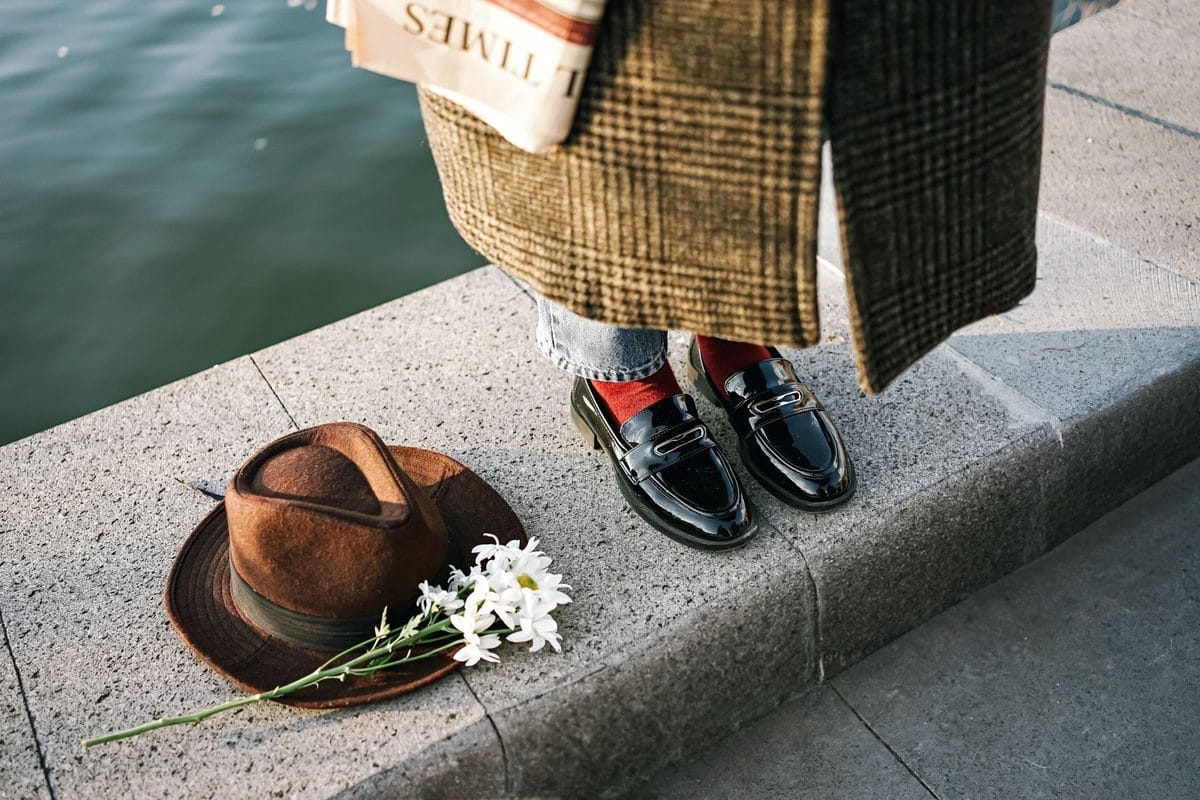
Walk into any shoe department this month and the lug soles have quietly slid to the clearance rack. Three seasons ago, a loafer without at least an inch of chunky rubber underneath felt almost unfinished — the platform sole was the entire point, the detail that made a ninety-year-old shoe look new again. Now the tables up front are stacked with flatter, softer silhouettes in tobacco brown and black patent, and nobody sent a memo announcing the switch. It happened because enough women got tired of the weight, and because the shoes that replaced them are, frankly, easier to actually wear to work.
The Chunky Sole Just Ran Out of Runway
Style guides that were still recommending platform loafers eighteen months ago are now calling the look "a bit tired," and the shift shows up first in what's selling at full price versus what's sitting on markdown. The direction for this season is described as more traditional, with sleeker, softer lines replacing the aggressive lug tread that defined loafers from roughly 2022 through last year. That doesn't mean every chunky pair is dead on arrival — stylist Jamie Lewin still argues for the bulkier construction because it "offers a modern take on the classic shoe," and there's a real case for keeping one thick-soled pair if your daily walk includes cobblestones or a long commute. But the center of gravity has moved. Suede is having its own moment inside the category, treated less like a delicate fabric and more like a wardrobe basic, and most shoe editors now consider a suede loafer as necessary as the classic black leather pair rather than an optional upgrade. Franco Sarto and Clarks are both shipping suede versions well ahead of the usual autumn rush, which tells you the brands expect the demand to start early this year. You'll notice the shift first in oxblood and chocolate-brown suede rather than the classic black or camel — those two shades are the ones showing up across nearly every price tier this month.
Boat-shoe-style loafers are resurfacing too, and this is the part that catches people off guard — the style read as dated for a solid decade before spring 2026 runways brought it back with a straighter, less nautical cut. Sperry has leaned into the moment with capsule partnerships alongside Monse and Aritzia, putting a brand most people associate with deck shoes and marina gift shops into fashion-forward collections instead. The lesson here isn't "boat shoes are back" in the literal sense — nobody's suggesting you pair them with a popped collar. It's that the loafer category as a whole is borrowing silhouettes from further afield than the usual penny-loafer template, and the resulting shapes look less costume-y than you'd expect.
What Sleek Actually Looks Like on the Shelf
"Sleek" is doing a lot of work as a marketing word this season, so it helps to know what it actually means on a shoe you can buy today. The apron toe is narrower than the rounded, almost bulbous shape that dominated the platform years. The tongue sits shorter and closer to the foot instead of standing up in a stiff flap. And the sole — this is the part worth checking with your hand before you buy, not just your eyes — has dropped to something closer to a half-inch than the inch-and-a-half platforms that were everywhere in 2024.
Gold hardware in a simple horsebit or a plain penny strap reads as more expensive than the chunkier snaffle-bit versions with visible branding, and that's true whether you're spending $30 or $3,000.
Three Price Tiers That Actually Make Sense
Buy loafers at the wrong tier and you'll either overpay for leather you didn't need or replace a cheap pair twice before winter. Steve Madden's black penny loafer runs $99.95 and uses genuine leather everywhere except the outsole, which is a fair trade at that price point — the construction holds up noticeably better than other shoes in its bracket. The G.H. Bass x Aritzia capsule, sold as the Milton and the Spence, lands around $146.25, with the Milton's shorter tongue and squared-off toe reading closer to the sleek silhouette than the brand's classic Weejuns. And if you just want something to survive a rainy commute without heartbreak, Walmart's Time and Tru faux-leather buckle loafers sit around $26.98, with even more basic styles dropping to $17.99. None of these three pairs are interchangeable, and the mistake most shopping guides make is treating everything under $150 as roughly the same shoe. Fit runs inconsistent across brands, too — a half-size up in the Steve Madden can feel identical to true-to-size in the G.H. Bass, so don't assume your usual size carries over automatically between labels.
- Steve Madden penny loafer — $99.95, genuine leather upper
- G.H. Bass x Aritzia Milton or Spence — around $146.25
- Walmart Time and Tru buckle loafer — $26.98, faux leather, and there's a stripped-down version for even less if you just need something to get through the season
At the top of the market, Chanel, Valentino, Hermès and Gucci are producing loafers in patent and semi-matte leather that photograph the way a $1,000-plus shoe should, while Saint Laurent and Fendi go bolder with visible logo hardware for anyone who wants the brand recognizable from across the room. The Row's brown leather loafers keep showing up on the feet of people whose job is staying ahead of the trend cycle, which is its own kind of endorsement. Here's the honest recommendation, though: unless resale value or a specific work dress code is part of the calculation, the $99–150 tier does 90% of what the $900 shoe does, and the difference mostly shows up in how the leather ages after three years rather than how it looks on day one.
Where the Cheap Pair Actually Wins
There's a real counterargument buried in the comfort category that most style guides gloss over. Franco Sarto's Carolynn model uses eco-friendly materials with a 1.5-inch lug sole and a menswear-inspired shape — which technically contradicts the "chunky is over" narrative, except it's designed for all-day wear rather than the photo-ready platform look that fell out of favor. Clarks' Westlynn Bella prioritizes support with a premium leather upper built for people on their feet eight hours a day, and G.H. Bass's Rumi Loafers were named the top overall pick in a major style-expert roundup as of a May 2026 update, beating out pairs that cost three times as much. If your job has you walking a hospital floor or a retail sales room rather than sitting at a desk, the comfort-first tier isn't a compromise — it's the smarter buy, full stop.
The Sock Question Nobody Asked For
Socks are back inside the loafer conversation in a way they weren't two years ago, and it's not just a styling footnote — it changes which pair you should buy in the first place. A chunky sole pairs naturally with a thick white scrunch sock pulled up past the ankle, which reads intentionally retro rather than accidental. A slick slingback loafer works better with a sheer fishnet sock peeking out at the vamp, a combination that looks more expensive than either piece costs on its own. And a classic penny loafer takes well to a thin silk dress sock in a contrasting color, the kind of detail that separates someone who thought about the outfit from someone who grabbed the first pair by the door.
Skip the sock entirely on a boat-shoe-style pair — that's the one silhouette where bare ankle still reads as the more finished choice, not the lazier one.
Buying the Right One for How You Actually Move
Match the shoe to your week before you match it to your outfit. A commuter walking twenty minutes each way to a train station needs the half-inch sole and a leather that can handle rain, which points toward the Steve Madden or G.H. Bass tier rather than a $900 patent pair that water-spots on contact. Someone on a hospital floor or a retail sales counter for eight-plus hours needs the Franco Sarto or Clarks comfort construction regardless of what's trending, because a shoe that hurts by hour six isn't a style win no matter how sleek the toe looks. And if the loafer's job is one client dinner a month rather than daily wear, that's exactly the scenario where a designer pair from The Row or Gucci earns its price — low mileage is where expensive leather actually pays off.
The shoe that gets worn three times a week for two years beats the one that photographs well and pinches by October. Buy for the walk you're actually taking, not the one in the campaign image.