The Shop-Mirror Problem
Somewhere around early June, most women buy a pair of sandals they'll wear twice. It's rarely about how the shoe looks — it's the strap that felt fine standing still under shop lighting but cuts into the top of your foot after forty minutes on pavement, or the flat little slide that offers precisely zero arch support past the school run. Sandals get judged in a mirror, in bare feet, standing still, which is the one context in which almost none of them will actually be worn. You stand for maybe ninety seconds before you buy a pair and then walk in them for eight hours a day, five days a week, for three months straight, and the gap between those two experiences is where most sandal budgets quietly go to waste.
None of this means sandals are complicated. It means the rules that matter are different from the ones most buying guides repeat, and they have almost nothing to do with trend reports or which colour is "in" this July.
Flat or Heel: The Real Question for All-Day Wear
Skip the debate about which height looks better and ask a more useful question instead: how many consecutive hours will this pair actually be on your feet? A flat sandal without a contoured footbed — the cheap rubber slides sold at every seaside kiosk for £8 — will leave your arches aching by 3pm if you're on your feet for a full workday, because there's nothing between your heel strike and the pavement. A block heel between 3 and 5cm, by contrast, distributes weight through the ball of the foot and the heel more evenly than a flat sole does, which is the actual reason podiatrists tend to recommend a small heel over a completely flat one for long days standing or walking, not fashion.
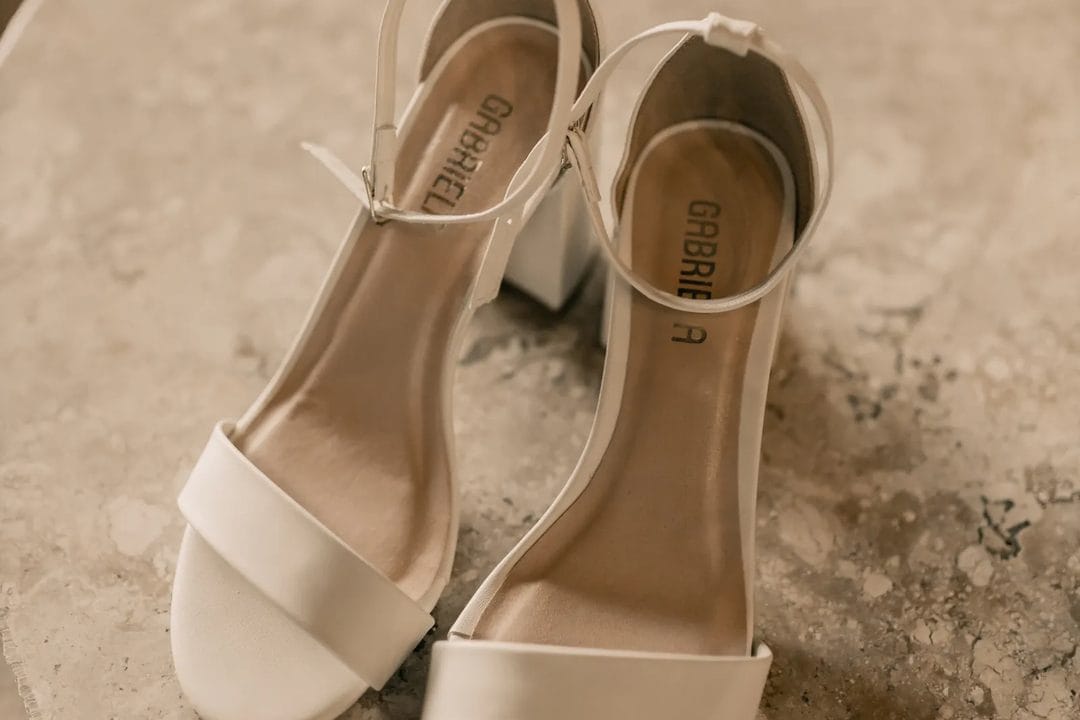
Buy the block heel for anything involving a commute, a full day of errands, or standing at a wedding reception, and save the flat slide for the pool, the beach, or a five-minute walk to a restaurant table. A stiletto sandal earns its place for exactly one category of day: sitting down. If you're on your feet more than you're seated, a 6cm heel is a decorative object, not a shoe.
Arch Support Is Not Optional Past Your Twenties
Here's the part almost nobody puts in a sandal guide: your feet change shape with age, and arch support that felt unnecessary at twenty-five starts to matter considerably more by your late thirties. Birkenstock's cork footbed, still around $110–$140 depending on the style, remains the reference point for a reason — it molds to your specific arch over the first few wears rather than forcing your foot into a generic curve. Ancient Greek Sandals, at $200–$260, look nothing like a Birkenstock but borrow the same logic in their leather-lined styles: a proper footbed under a flatter-looking upper.
The Fit Mistakes That Ruin an Otherwise Good Sandal
Toe overhang is the single most common sandal-fit error, and it's almost always invisible in a shop because you're standing on carpet or polished flooring rather than gravel, cobblestone, or hot pavement. If your toes or heel extend even slightly past the sole's edge, that overhang catches on kerbs, gets stepped on in crowds, and — worst of all — takes the brunt of the impact when you misjudge a step down. Buy true to your measured foot length, not the size you wear in trainers; sandal sizing tends to run a touch smaller because there's no sock buffer and no closed toe box to absorb half a size of slack.
- Measure your foot length standing, not sitting — feet spread slightly under weight, and a seated measurement will undersize you.
- Check the strap position across the instep. A strap that sits too low will slip with every step; one that sits too high digs into the ankle bone within an hour.
- Leather straps stretch with wear, but suede and most synthetics do not, so buy suede and synthetic sandals for a snug (not tight) fit from day one.
And don't assume a wider strap automatically means more comfort. A wide strap in stiff leather can cause more rubbing than a thin one in soft, pre-broken-in leather, which is exactly why Everlane's $118 Day Slide, made from a noticeably softer nappa than most sandals in that price bracket, outperforms sturdier-looking competitors on actual blister count after a week of wear.
How Many Pairs a Summer Capsule Actually Needs
Three pairs. That's genuinely the whole list.
Three pairs cover a working summer without a single gap: one flat everyday sandal in a neutral tone, one dressier block-heel pair for evenings and events, and one pair built specifically for water — the beach, the pool, a rainy market morning — that you won't mind ruining. Adding a fourth pair for "just in case" almost always turns into a shoe that sits in the back of a wardrobe from July through September, worn twice, because it duplicates what one of the other three already does. The neutral everyday pair is the one worth spending on, because it earns the most wear-per-pound of anything in a summer rotation — it's the shoe doing seven days a week of actual work while the other two sit in reserve for specific occasions. Skip the temptation to buy a fourth "for holiday" too; the water sandal already covers that trip, and a fifth pair packed into a carry-on is a fifth pair you'll wear once and carry home unworn. Colour discipline matters here more than most people admit: a neutral everyday pair in tan, black, or white pairs with roughly four times as many outfits as one in a seasonal print, which is the actual reason so many capsule wardrobes default to the same three shoe colours year after year. If you genuinely want a statement pair, let the evening sandal carry that risk instead of the one you'll reach for every morning — a bold colour on a shoe worn twice a month is a low-stakes experiment, and the same colour on a shoe worn daily is a decision you'll be renegotiating with your wardrobe by September.
Matching Sandals to Hemlines and Trouser Widths
A wide-leg trouser needs a sandal with some visual weight underneath it — a chunky block heel or a thicker platform sole — or the proportions read top-heavy, with all the volume sitting above the ankle and nothing grounding it. A skinny strappy flat under a wide trouser hem tends to disappear entirely, leaving fabric pooling over almost nothing, which reads unfinished rather than relaxed. Midi and maxi skirts want the opposite treatment entirely: keep the sandal slim and low, because a chunky sole under a floor-skimming hem shortens the leg line and adds bulk exactly where you don't want it, and that trade-off catches out even women who've dressed for their body shape for years. Above-the-knee hemlines are the one place where an ankle-strap sandal genuinely does something useful — it draws a visible line at the narrowest part of the leg, which is flattering on essentially every leg shape, not a trick reserved for one body type. Try it with a hemline that sits just above the knee and you'll see the effect immediately, in a way swatches or product photos never quite convey. Cropped trousers sit in the trickiest middle ground: anything that hits mid-calf shortens the leg unless the sandal picks up where the fabric stops, so a strap that begins right at the ankle bone rather than higher up the foot keeps the leg line reading continuous instead of cut off.
The Tan-Line and Pedicure Reality Nobody Mentions
Whichever strap pattern you wear most in June will leave a visible tan line by August, and it's worth choosing that pattern deliberately rather than by accident. A single-strap slide leaves one clean line across the foot that a different sandal style can mostly disguise later in the season; a criss-cross gladiator style leaves a much harder pattern to hide once you switch to anything strappy or open-toed for an evening out.
On pedicures: bright reds and corals photograph well but show chips within a week under open-toe sandals, because sandal straps rub directly against the nail edge in a way closed shoes never do. A sheer or milky pink shows the same chip far less obviously, which is the actual, unglamorous reason most manicurists steer sandal-season clients toward softer shades — not because bold colour is somehow wrong for summer.
When to Spend and When to Walk Past
Spend on the everyday neutral pair and the water sandal you'll wear against sand and chlorine, because both get worn hard enough that a $30 pair from a fast-fashion shop will visibly separate at the sole by August. Marks & Spencer's leather footbed sandals, generally £35–£55, hold up far better over a full season than anything in a similar price bracket from a fast-fashion retailer, largely because the sole is stitched rather than glued.
The dressier evening pair is the one place where a lower spend genuinely makes sense — it sees maybe fifteen wears a season rather than ninety, so the cost-per-wear math simply doesn't favour a $300 pair the way it does for the shoe you put on every single morning. Dune London's occasion sandals, typically $90–$130, look considerably more expensive than their price tag once you're seated at a table, which is the only context that pair really needs to perform in. Russell & Bromley sits at the other end — $180–$320 — and it's worth the jump specifically for a neutral block heel you intend to rewear across three or four summers rather than one, since the leather quality and construction hold their shape through repeated wear in a way most mid-range brands don't. Buy that tier once and skip replacing it annually; don't buy it for a pair you'll rotate out after one season.
The Three Pairs That Actually Earn Their Shelf Space
A neutral leather slide with a proper footbed, a block-heel sandal in a colour that works with at least half your wardrobe, and one water-ready pair you don't have to think twice about ruining — that's the entire list, and everything past it is either a duplicate or an impulse buy waiting to happen. Try the block-heel pair on with actual trousers and skirts from your wardrobe before buying, not just bare legs in a changing room mirror, because that's the test that catches the proportion problems a shop mirror never will.
The tan line will fade by October. The receipt for a sandal that fell apart in July won't.