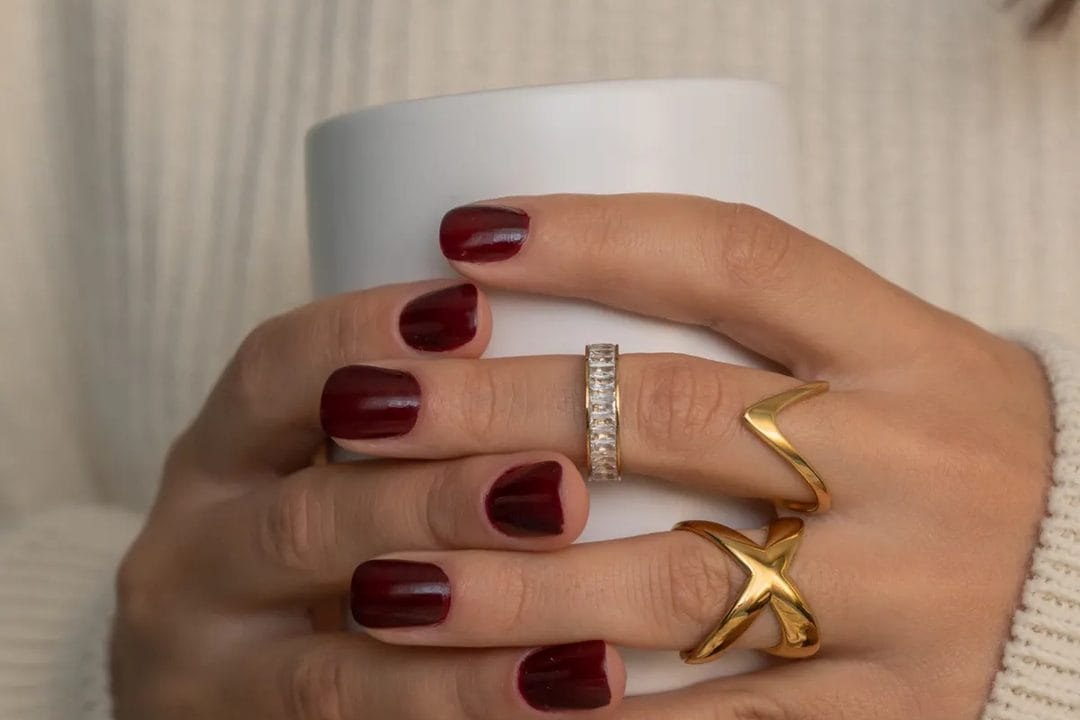
Pull up any manicure recommendation from March and it says the same thing: milky, sheer, barely-there, the kind of polish that photographs as "your nails, but better." Pull up one from this month and the vocabulary has flipped entirely — chocolate, espresso, cocoa, anything with actual pigment sitting in the bottle. That's not a coincidence, and it isn't only because brown pairs well with a camel coat. Milky nails work in July light, when everything is bright and the point is looking effortless. They go flat under September's grayer skies and the darker knits everyone's already reaching for, which is exactly the gap chocolate brown is filling right now.
The Milky Manicure's Expiration Date
The sheer-nude era — OPI's Bubble Bath, Essie's Ballet Slippers, the entire "your nails but nicer" category — had a three-year run that started well before most people noticed it happening. It worked because it was safe: no color commitment, no visible growth-out, forgiving on every skin tone. That's also its ceiling. A milky manicure disappears the moment the light changes, and against a burgundy sweater or a wool coat it reads less like polish and more like nothing happened at all.
Chocolate brown doesn't have that problem, and it's not the beige-adjacent "your natural nail, slightly warmer" that brown sometimes gets confused with. The shade doing the actual work this season is closer to bittersweet chocolate than caramel — deep enough to register as a real color choice from across a room, not a compromise between polish and no polish. OPI's You Don't Know Jacques! has been the industry's go-to cool-toned brown for over a decade, and it's having a real moment again. Essie's Chinchilly leans grayer and reads more sophisticated under office lighting than its swatch suggests. Chanel's Le Vernis in Particulière is a taupe-brown that's been discontinued and reissued more times than the brand will admit. It remains the benchmark most salon techs mix custom colors against.
What Actually Separates a Good Brown from a Muddy One
Skip anything marketed as "nude brown" without a second qualifier — on most skin tones it reads gray by day three, once the polish has oxidized slightly under normal wear. Buy the color that looks slightly too dark in the bottle. Brown polishes lighten visually once they're on the nail and catching light, so a shade that looks intimidating in the cap usually lands exactly right on the hand.
- Sally Hansen's Miracle Gel in Chocolate Kiss ($10.99) is the drugstore option worth actually seeking out — full pigment in two coats, which most gel formulas in this price bracket can't manage
- Deborah Lippmann's Espresso Yourself runs $20 and has a jelly-like finish that photographs warmer than it looks in person
- Dior's Vernis in 848 Trench, despite the name, is the house's deepest cocoa-brown and at $32 it's priced like the rest of the Vernis line
- One more option, if you're not buying a bottle at all: Olive & June's press-on line has a shade called Fig that's closer to chocolate than the name suggests — useful for testing the trend before committing to it
Here's the one thing worth being direct about: skip anything with shimmer or micro-glitter mixed into the brown base. It photographs fine on Instagram and looks cheap in person, especially once the polish is a week old and the shimmer has started separating unevenly near the cuticle line. A flat crème finish or a glazed, jelly-like sheen — not a metallic — is what makes this trend read expensive instead of accidental.
Shape Changes Everything About How the Color Reads
Nail shape does more work than most people give it credit for, and chocolate brown is unforgiving about mismatches. On a long almond nail, dark polish elongates the finger and looks intentional — closer to what you'd see on a runway backstage shot. On a short, square-cut nail, the same exact shade reads clean and a little severe, which is the look most fashion editors are actually going for this season rather than the dramatic stiletto version. The shape everyone's landing on for this particular trend is squoval — square with softened corners — because it's the shape that reads well at both nail lengths, and it grows out without the awkward pointed-tip stage that almond and coffin shapes go through.
What doesn't work: a long coffin or stiletto shape in chocolate brown paired with anything minimalist elsewhere in the outfit. The combination reads costume rather than considered, and it's the single fastest way to age the trend by two years before it's even peaked. Keep the rest of the look quiet — a plain sweater, un-fussy jewelry — and let the nail color be the one loud decision.
Doing It Yourself Without It Looking Homemade
A salon gel manicure in this shade runs $45 to $70 in most US cities depending on whether you're adding length, and it lasts two to three weeks before the regrowth line becomes distracting. At home, the difference between a manicure that looks salon-done and one that looks like you did it in your kitchen usually comes down to two things: base coat prep and coat count, not the brand of polish itself.
Push back cuticles before painting, not after — this sounds backward but doing it after leaves polish residue trapped at the cuticle line that peels within two days. Apply two thin coats rather than one thick one; a thick single coat of dark polish takes twice as long to dry and is far more likely to dent before it sets. Olive & June's brush design (the handle is noticeably longer than a standard polish brush, built specifically for painting your non-dominant hand) genuinely does make the dominant-hand-only problem less obvious, and it's one of the few gimmick-sounding product features that actually holds up in practice.
Why Dark Polish Chips Faster Than Nude — And What Actually Fixes It
Dark colors show chips within a day or two in a way sheer polish never does, because there's no color gradient to hide a small nick near the tip. Sealing the free edge of the nail — running the topcoat brush under the very tip, not just across the top — is the single step most home manicures skip. It's the reason salon sets outlast at-home ones even when the base polish is identical. Sally Hansen's Miracle Gel top coat, sold separately from the color for about $10, is formulated specifically for the brand's gel-effect line. It noticeably extends wear versus a generic quick-dry top coat. Skip cheap fast-dry top coats entirely if you're going dark. Most of them are formulated for sheer polish and don't build enough of a shell over saturated pigment, which is exactly where the chipping starts.
Where the Trend Actually Runs Into Trouble
Brown is not automatically flattering just because it replaced beige.
Most coverage of this shade skips that, and pretending otherwise does readers no favors. On very fair, cool-undertone skin, a warm chocolate brown can look slightly muddy against the hand rather than sitting apart from it — the fix is going a shade cooler, toward Chinchilly rather than Chocolate Kiss, or adding a half-tone of gray into the mix. On deeper skin tones the same warm chocolate reads rich rather than muddy, which is exactly why the trend originated on darker-skinned models before it crossed over into mainstream coverage this summer.
Buy one bottle before committing to a full gel set at the salon. Chocolate brown wears differently under office fluorescents than it does in the swatch photo taken in natural daylight, and the only way to know if a specific shade works on you is to see it on your own hand for a week, not someone else's in a lookbook.