Skinny jeans didn't die quietly. They died the way most fashion staples do — not in a single dramatic moment, but through a thousand small defections, one editor at a time swapping her go-to pair for something with actual room to move. Walk through SoHo or Notting Hill this week and the silhouette shift is impossible to miss: legs that swing instead of cling, hems that stack instead of taper, and a whole new set of rules about what "flattering" even means. Even the brands that built their reputation on the skinny cut have quietly shifted their homepage hero images toward wider legs, which tells you more about where the sales data is pointing than any runway report does. The question isn't whether skinny jeans are over. It's which of the three contenders — wide-leg, barrel, or straight — actually deserves the closet space this fall, and which one is genuinely wearable outside a fashion-week street-style photo.
The Wide-Leg Takeover Isn't New — What Changed Is How It's Being Styled
Wide-leg denim has technically been "back" since 2019, which is long enough that calling it a trend at all feels dated. What's different for fall 2026 is the styling logic around it. Two years ago, wide-leg jeans got paired with cropped tops and platform sneakers in a look that read distinctly Gen Z. Now they're showing up with fitted turtlenecks, tailored blazers, and loafers — a combination that reads more like a woman who got dressed for a client meeting than one who raided a vintage store. Ganni's wide-leg jeans ($245) and COS's clean, unwashed version ($130) both lean into this shift: minimal distressing, a straighter drape through the thigh than the exaggerated flare of 2022's take, and a rise that sits at the natural waist rather than the hip.
The practical upside is real. Wide-leg denim in a mid-weight rigid fabric — not the stretchy, clingy blends that dominated the skinny-jean decade — holds its shape through a full workday in a way stretch denim never could, and it does something skinny jeans structurally cannot: it balances a proportion. A boxy jacket or an oversized sweater looks unintentional over skinny jeans, like you forgot to finish getting dressed. Over a wide leg, the same top reads as a decision. That's the entire argument for the silhouette in one sentence, and it's why stylists on set have been reaching for it well before it hit the sales floor.
The Barrel Leg Is the Silhouette Editors Actually Bought With Their Own Money
If wide-leg is the trend fashion week validated, barrel-leg is the one that actually moved units this August. The shape — full through the thigh, tapering in toward the ankle in a rounded curve rather than a straight line — showed up on Reformation's Val jean ($148) and Agolde's Baggy ($228), and both sold through their first restock in under two weeks according to size availability on their own sites. The appeal is specific: barrel jeans create volume without the swishing, dust-sweeping hem of true wide-leg, which makes them workable for anyone who actually commutes, runs errands, or navigates a subway platform in the rain.
Buy the barrel leg in a rigid or low-stretch denim, not a soft, drapey one — the shape depends on the fabric holding its curve, and a jean with more than 2% elastane will just collapse into something that looks like an oddly-shaped straight leg by lunchtime. Gap's barrel-leg jeans at $89.95 are the rare budget entry that gets the stiffness right, which is more than can be said for several jeans twice the price that prioritized softness over structure.
There's a real learning curve to styling barrel jeans well, and pretending otherwise does readers no favors. The shape is unforgiving on anyone under 5'4" unless the hem gets cropped or hemmed to hit right above the ankle bone — left at full length, it swallows a shorter frame and reads as ill-fitting rather than intentional. On a taller frame, or with the right hem, it's arguably the most flattering waist-to-ankle line denim has produced in a decade.
Straight-Leg Is the Safe Bet, and Safe Doesn't Mean Boring This Time
Straight-leg jeans occupy a strange middle ground in this conversation because they never fully left. But the straight leg getting worn now is not the straight leg of five years ago — it's higher-rise, straighter through the hip (no taper at all, not even a subtle one), and typically finished with a slightly raw or unfinished hem. Levi's Ribcage Straight ($98) has become something close to a uniform piece among editors who want the wide-leg energy without committing to the volume, and Madewell's Perfect Vintage Straight ($128) does the same job in a softer, more worn-in wash.
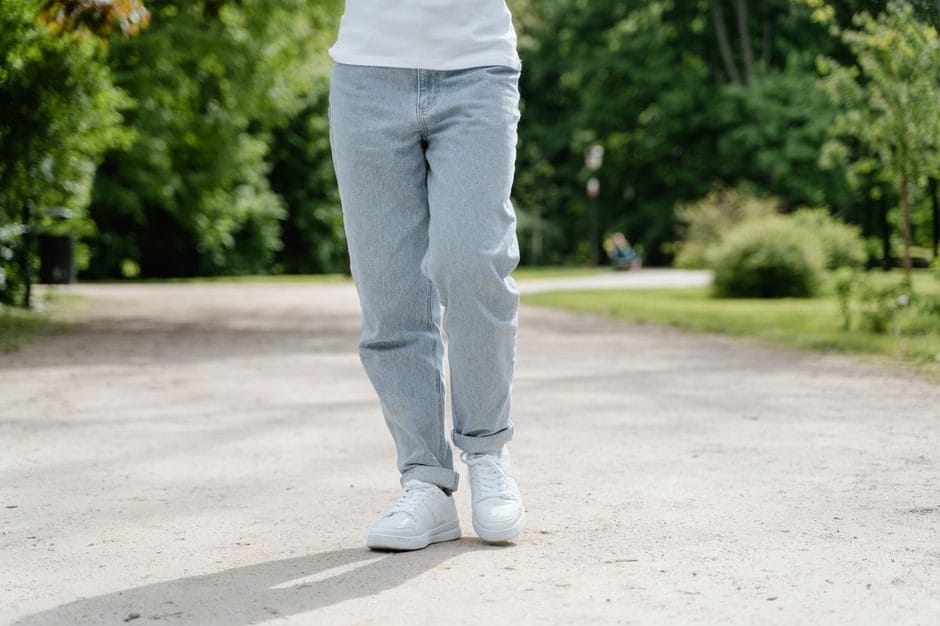
The straight leg is the better choice for anyone whose wardrobe leans casual day-to-day — it pairs with sneakers in a way barrel and wide-leg denim genuinely don't, and it doesn't require the hem calculation that barrel jeans demand. Choose straight-leg over wide-leg if your daily uniform includes a lot of walking, cycling, or moving through crowded spaces where fabric volume becomes a liability rather than a style statement.
What This Actually Means for the Skinny Jeans Already in Your Closet
Nobody needs to throw out a functioning pair of skinny jeans, and any advice suggesting otherwise is selling something. What's actually happening is narrower and more useful: skinny jeans are dropping out of rotation as the default choice for a going-out or work-adjacent look, while staying entirely relevant for the things they've always done well — under boots, under a long coat, on a bike, at the gym doubling as leggings on a lazy day. The shift isn't moral. It's situational.
Where the real style risk sits is in buying nothing new at all and assuming last year's proportions still read as current. They don't, not in the way a slightly-too-short blazer or a slightly-too-narrow trouser silhouette dates a whole outfit even when every individual piece is technically fine. One new proportion — even a single barrel or straight-leg pair — resets how everything else in a wardrobe reads.
Rise, Wash, and Length — the Three Details That Decide Whether It Works
Silhouette gets all the attention, but rise is doing more of the actual work than most people realize. A true high rise — sitting at or just above the natural waist — is what makes wide-leg and barrel jeans look tailored instead of borrowed from someone bigger. A mid-rise version of either shape tends to add visual bulk right at the hip, which defeats the entire point of choosing a roomier leg in the first place.
Wash matters almost as much. Dark, rigid indigo denim in any of these three silhouettes reads more elevated and pairs more easily with tailoring; a lighter, more washed-out finish pushes the same shape toward off-duty and weekend territory. Frame's dark-wash Slim Wide Leg ($228) and Citizens of Humanity's Marcelle in an inky rinse ($238) both lean into that first category deliberately — this is denim built to sit under a blazer, not under a graphic tee. A mid-blue wash, by contrast, is the hardest to place: it reads neither elevated nor deliberately casual, and it's usually the pair that ends up worn the least once the initial excitement of the purchase wears off. And length is non-negotiable: every one of these silhouettes needs a proper hem, whether that's a tailor at $15–20 a pair or careful DIY with a seam ripper and an iron. A wide-leg or barrel jean puddling on the floor looks like a mistake regardless of how correct the rest of the outfit is.
What You Actually Get at Each Price Point
The $200 pair is not always better than the $90 one.
That's counterintuitive in a category obsessed with fabric weight and Japanese selvedge, but it holds up here. At the entry tier — Gap's barrel leg at $89.95, Old Navy's wide-leg at $59.99, Uniqlo's straight-leg at $49.90 — the fabric weight is usually where the compromise shows up first. These jeans tend to run lighter and softer than the shape needs, which is fine for a straight leg but works against a barrel or wide leg that depends on structure to hold its line. Old Navy's version, in particular, softens noticeably after two or three washes, so budget shoppers should size a touch smaller than usual and expect the silhouette to relax within a month of regular wear.
The $120–$150 tier is where most of the actual quality jump happens, and it's the range worth prioritizing if only one new pair is going in the cart this season. Madewell, Reformation, and Everlane's straight-leg ($128) all use a heavier rigid or low-stretch denim that keeps its shape for a full year of regular rotation, and the fit through the hip and thigh is noticeably more considered than anything under $100. Above $200 — Agolde, Frame, Citizens of Humanity — the difference is less about the denim itself and more about finishing details: clean topstitching, a hem that doesn't need immediate tailoring, and a wash that photographs as intentional rather than faded. Worth it for a piece worn twice a week; a harder case to make for something that'll sit in rotation with five other pairs.
How to Buy One Pair Without Wasting $200
Start with whichever silhouette matches how the rest of your week actually looks, not which one photographed best on a stranger's Instagram grid. A straight-leg pair from Levi's or Madewell is the lowest-risk entry point and the one most likely to still feel current in two years, which matters given denim's price point. Barrel-leg is worth the investment only if a tailor is genuinely part of the plan — buy it, try it on, and book the hem before wearing it out. Wide-leg rewards anyone who already dresses slightly formal day-to-day, since it does its best work under structured jackets and knits rather than casual tops.
One more thing worth saying plainly: none of these three silhouettes require replacing an entire wardrobe of tops and shoes. A loafer, a pointed flat, or a low block heel works across all three. The only real casualty is the strappy stiletto sandal that used to peek out from under a skinny hem — under a barrel or wide leg, it simply disappears, and there's no styling trick that fixes that. Save it for a dress.