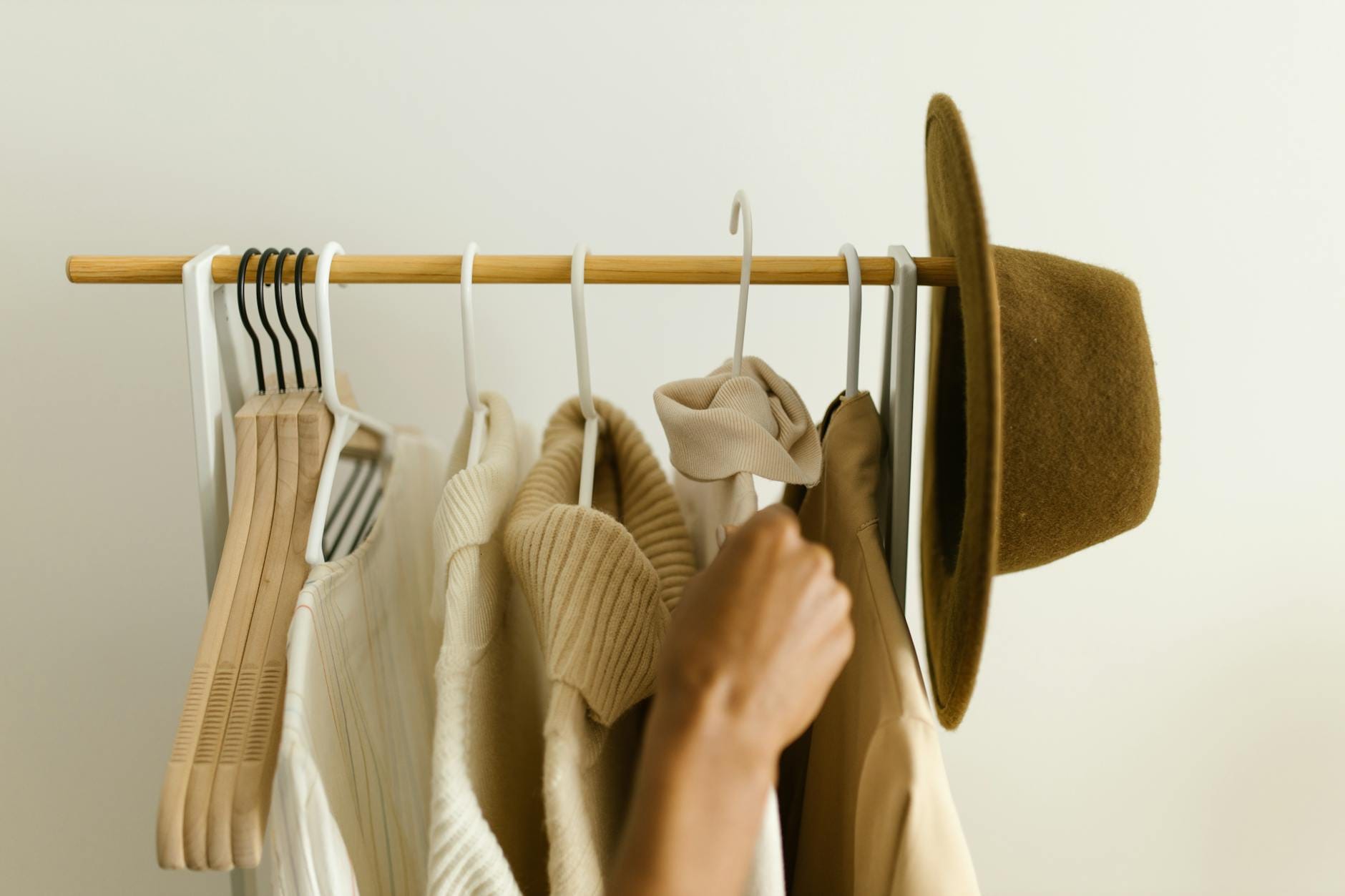
The capsule wardrobe idea has been around since the 1970s, but the version that gets shared on social media now is mostly a beige aesthetic with a credit card behind it. The real point of a capsule is much narrower: own fewer pieces, wear them more, replace them on a slow cycle instead of a monthly one. Done properly it is the cheapest way to dress well; done as an aesthetic, it is the most expensive.
What follows is a working capsule for a woman in her thirties or forties who has a job, possibly children, weekends that mix the practical with the social, and no patience for clothes that look good only in photographs. Fourteen garments. Real brands at three price tiers. No shoes, no outerwear, no accessories — those are separate budgets with separate logic.

The fourteen-piece list
- One pair of straight or wide-leg dark denim jeans
- One pair of black tailored trousers
- One pair of stone or olive chinos
- One A-line midi skirt in a neutral
- Three plain T-shirts in white, black, and one other colour you actually like
- One striped long-sleeve top, the cotton kind that does not bobble after four washes
- One white button-up shirt that fits across the shoulders properly
- One soft knit jumper in cream, beige, or grey
- Two day dresses, one short-sleeved and one long-sleeved
- One blazer that closes
That is it. Fourteen items. They permute into roughly forty distinct outfits without forcing combinations, more if you count accessory changes. The maths is dull but the dullness is the point — variety inside the wardrobe means novelty inside your week.
Three price tiers, with brands worth their tag
Almost every piece on the list above exists at three rough budgets. Pick a tier and stay in it, otherwise you create a wardrobe where the cheapest pieces wear out three years before the expensive ones and the proportions are always slightly off.
Budget tier, roughly £400 total. Marks & Spencer and Uniqlo carry the workhorses. The Uniqlo Smart Ankle Trouser at £35, the M&S Cotton Rich Straight Leg Jean at around £30, the Uniqlo Premium Linen Shirt at £40. The cuts are honest and the fabrics outlast their price. The blazer is the weak point at this tier — expect to replace it within three years.
Mid tier, roughly £900 total. Cos, Arket, and Sezane occupy a band where the construction is better than the price suggests if you buy at the seasonal markdowns. The Cos wide-leg trouser around £85, the Arket merino crewneck at £75, the Sezane Will shirt around £100. Markdowns hit February and August. Paying full retail on this tier defeats the budget logic.
Investment tier, roughly £2,000 total. Toteme, Khaite, The Row at the high end. You are buying construction that holds shape for a decade, fabric weights that drape correctly, and finishing details you can feel without looking. Worth it for two or three core pieces, foolish for the entire wardrobe. The Toteme Twisted Seam Trouser at around £390 is the kind of garment people quietly wear for fifteen years.
What sustainable actually means here
The fashion industry generates roughly 92 million tonnes of textile waste a year, the bulk of it from poly-cotton blends that cannot be recycled. The single change that does more than any certification logo is reducing the number of new garments entering your wardrobe each year. A capsule of fourteen items, refreshed at four pieces a year, generates less waste than a single typical Zara hauling weekend.
Beyond volume, the materials matter. Cotton — preferably organic — wool, linen, and silk are all recyclable and biodegrade in a sensible timeframe. Polyester, viscose, and nylon do not. There is a place for synthetic in performance pieces, but inside the capsule wardrobe it has almost no business. The £35 Uniqlo trouser in cotton-rich blend is a kinder long-term choice than the £45 polyester version from a fast-fashion brand, even though the per-wear cost ends up similar.
The mistakes that wreck a capsule in eight weeks
Buying for an imagined version of your week. You do not have a Sunday brunch every weekend. You do not wear silk camisoles to the office. Look at what you actually wore in the past month — not what you wished you wore — and build for that.
Choosing colours from a Pinterest board instead of your skin. Beige sits very differently on warm and cool undertones. If you have never figured yours out, the cheap test is to hold a piece of silver and a piece of gold jewellery against your wrist in daylight. Whichever brightens your skin tells you which neutral family to centre. Half of capsule failures are women in colours that wash them out.
Refusing to buy duplicates. If you find a white T-shirt that fits well, buy two. They will not be made next season; the pattern will be tweaked, the fabric will be slightly different, and you will spend nine months trying to find an equivalent. Buying twice is not excess in a capsule — it is risk management.
Treating the list as scripture. Your job, your climate, your hobbies modify the list. A woman who teaches yoga twice a week needs more knitwear and fewer blazers. A woman in finance reverses the proportion. The fourteen-piece skeleton stays; the meat on it bends to your life.
What to do with what you already own
Before buying anything, lay your existing wardrobe on the bed and apply the rule of last six months. If you have not worn a piece in six months, you almost certainly will not wear it in the next six. There are two exceptions — formal wear and seasonal outerwear — and they are exceptions, not loopholes. Everything else either rotates into the capsule slot it fills, gets donated, or gets resold on Vinted.
You will end up with gaps. The point is to see them clearly so you can fill them with intention instead of grabbing whatever is on the shop floor next time you walk past Zara. Three months of disciplined gap-filling beats two years of impulse buying, and the resulting wardrobe finally looks like a person made choices.