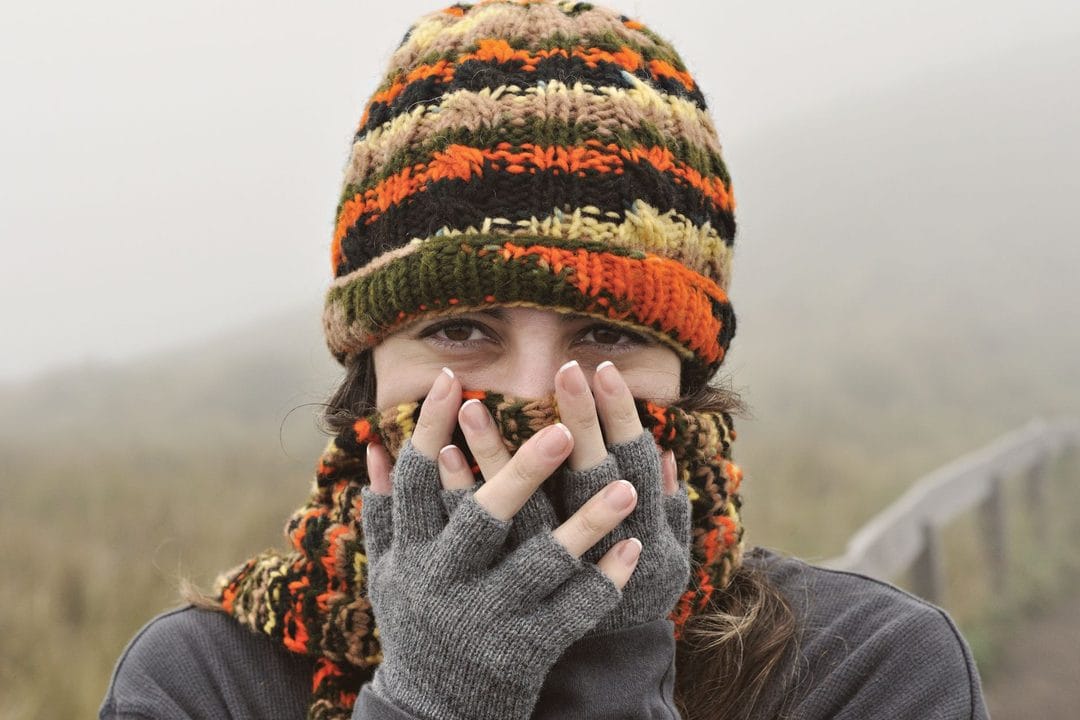
It is 7:10 on a weekday, the sky is still the colour of wet slate, and you are standing at the bus stop trying to tap your card with one glove half off. From late October the dark and the cold tend to arrive together. The clocks go back in the UK on 25 October and in the US on 1 November, so for several weeks the walk to work starts before the sun is up. Most people solve this with whatever gloves were at the bottom of the drawer last winter. That is the wrong approach. Gloves and a scarf are the two accessories that do the most work between your front door and your desk, and they are also the two that people buy most carelessly. This guide is about choosing them for an actual commute rather than for a shop window.
Start with the hands, because they go numb first
Your body protects its core before anything else, so blood is pulled away from the fingers and toes once the air turns cold. That is why a pair of gloves that looks warm on a rail in the shop can still leave you swearing at the platform. Thin knitted gloves trap very little air, and a damp pair cools much faster than a dry one. The fix is rarely one heavy pair. It is a layer you can adjust, something close to the skin with a wind-resistant shell over it. Think of it as a base layer for the hand. Most commuters skip that step and then wonder why their fingers ache by the time they reach the office door. A thin merino or synthetic liner under a wind-resistant outer glove gives you warmth you can dial up or down, which matters on a train that is either freezing or boiling. The liner also takes the sweat, so the outer pair stays dry for longer.
Touchscreen tips are a compromise, not a feature
Conductive fingertips work by weaving a conductive thread into the index finger and thumb. They are useful when you need to pay or check a map without taking a glove off, but the coating tends to wear away with repeated washing, and some pairs barely register a tap at all. Test them before you buy by swiping a home screen with the glove still on. If the fingertip does not respond on the first try, it will not respond at 7:10 with a bus pulling in.
Check these things in the shop, not only the price tag:
- The conductive patch sits on the index finger and the thumb, not on the tip of one digit alone.
- The cuffs are long enough to cover the wrist when you reach up for a bus rail.
- The lining feels thin but not flimsy when you stretch it between your fingers.
- Try the glove on with your coat sleeve pushed up, because a glove that fits under a shirt cuff is no use under a heavy wool coat.
Seams matter too. A seam that runs across the palm will rub a blister on the first long walk, and nobody wants to discover that on a Monday. Look for flat-stitched or externally stitched seams where you can, and press the palm area with your thumb before you commit.
Scarves: the wool question
A scarf has one job on a commute, and that is to keep the cold air off your neck and chin while you walk. Wool does this well because the fibres trap warmth even when they get a little damp from breathing or light rain. Acrylic is cheaper and washes easily, yet it feels scratchy against the skin and it does not breathe much, so you overheat on the train and then freeze again at the stop. A fine merino or a wool and cashmere blend strikes the best balance for most people. Buy the wool, even if it costs more. You will wear it on every cold morning for years, and it will still look right after the fourth winter when the cheap alternative has pilled into little balls on the front.
There is one exception, and it is worth knowing before you spend. A very thick chunky scarf bulks up under a coat collar and makes turning your head awkward on a crowded platform. If your coat already sits high and tight at the neck, choose a lighter scarf or a neck tube that lies flat. Many people wrap the same scarf three times, and that is exactly how it ends up tangled in a revolving door or caught on a stair rail. Keep the wrap simple: one loop, the ends tucked into the coat, and a length roughly equal to the width of your shoulders.
Why dark mornings change what you wear
In daylight, a dark navy scarf looks elegant. At half past seven in November, with the streetlights still on and the pavement wet, it can disappear completely against a dark coat. This is not a reason to wear neon, and most readers will not want to. It is a reason to notice small details. A reflective trim on a glove cuff or a thin reflective thread woven into a scarf edge makes you easier to see at a crossing without changing the look of the outfit at all. If you spot that detail in a shop, it is a small addition worth paying for, and it costs you nothing in style. Check the label and the product description rather than trusting the hangtag, because hangtags often promise more than the garment delivers.
Light colours show grime quickly on a wet commute, so a mid-tone grey or camel scarf is often the more practical choice than cream. Lighter shades do look fresh for a few weeks, and that is worth something for the office. Choose the shade you can wear with the coat you already own, though, because a scarf that matches nothing stays in the drawer.
Wet pavements are the real enemy in November. Damp cuffs and soaked gloves cool the skin far faster than a dry, windy morning would. A waterproof outer shell on the glove, paired with a warm liner underneath, handles this better than any single thick pair.
The commute test before you buy
Wear them on a real walk before you decide.
Most shops will not let you run through everything below, so do what you can and treat the result as a guide, not a verdict:
- Walk ten minutes at a normal pace in the gloves, then check whether your palms feel clammy, since clammy palms chill quickly once you stop.
- Tap a card, open a phone and scroll once, all without taking the glove off.
- Grip a bag strap and a bus rail, because grip matters more than looks when the platform is crowded.
- Put the scarf on over your coat, then turn your head left and right to check how far you can see at a junction.
A glove that fails the second test is a poor buy for a city commuter, even if it is the warmest thing on the shelf. A scarf that fails the fourth test will spend the winter in a drawer, however lovely the wool feels. Think about your bag too. A tote with a long strap sits right where a fringed scarf end hangs, and fringes that catch on the strap wear out faster than any other part of the scarf. If you are buying online, you cannot run these tests, so order from a retailer with a clear returns window and do them at home the day the parcel arrives.
What to buy, and what to skip
Buy one good pair of gloves and one spare thin liner, rather than three mid-range pairs that all lose their shape by February. Keep the wool scarf in a colour that goes with two coats you already own, because a scarf you can match is a scarf you actually wear. Skip the chunky novelty knits that look lovely in a photograph and itch by the second stop on the bus. For the wet days, a pair of waterproof gloves with a fleece lining is worth having. They cost more than a standard pair, and they stop the damp that makes the cold feel twice as bad. Pack the spare liner in your bag, because the one you wore to the office will be soaked by lunch on a rainy Thursday.
Look after them so they last past one winter
Most wool scarves die in the wash, not on the bus. Hand wash in cool water with a wool-safe detergent, press the water out gently in a towel, and dry the scarf flat, away from radiators. Hang gloves by their cuffs to dry, and turn them inside out first so the liner dries too. Pilled fabric can be lifted with a fabric shaver, which is cheaper than replacing a good scarf after one careless season. A little attention in October keeps the same accessories working in February.